
Gulay lang, sarap na
How to Cook Dinengdeng (Ilocano Style) with Grilled Fish, Saluyot & Labong
Ilocano dinengdeng built from whatever is on hand—grilled fish, saluyot, labong, okra, and shimeji mushrooms in a simple bagoong broth. Watch our latest video and cook along!
The real secret to dinengdeng is not a special ingredient—it is a mindset. This Ilocano vegetable stew has always been about cooking with whatever is on hand, especially when the “traditional” vegetables are nowhere to be found. Walang sitaw o kabute? Gamitin mo na lang ang meron ka—minsan pa nga, mas magugulat ka sa resulta.
Speaking of scarce finds: we were thrilled to come across fresh saluyot here in Madrid. Hindi biro maghanap ng saluyot sa Europa, so the moment we saw it, we grabbed it and built this dinengdeng around it.
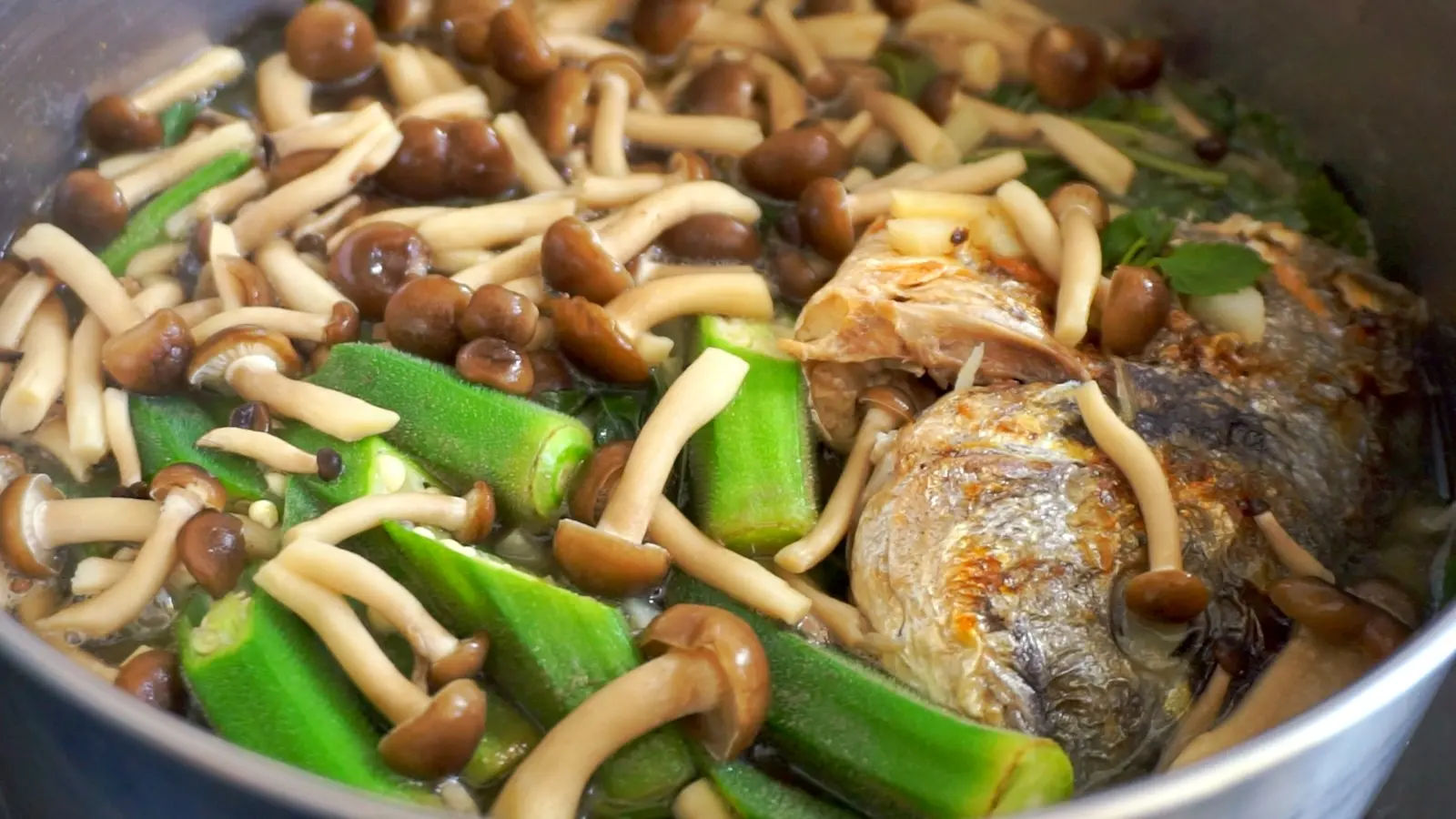
That is exactly how this pot came together—grilled fish, saluyot, labong, okra, and shimeji mushrooms, all simmered in a simple bagoong-based broth. No complicated steps, puro gulay at sarap lang.
Watch the Video
If you enjoy the video, do not forget to subscribe to our YouTube channel so you never miss a new recipe.
Tips for a Better Dinengdeng
Layer the vegetables by cooking time. Firmest first, leafiest last. Labong and okra can take the heat; saluyot cannot. Add everything at once and you end up with one uniform texture instead of a pot with character.
Let the bagoong lead. Dinengdeng is not a sinigang and not a bulanglang—the flavor comes from fermented fish, not from souring agents. Season in stages and taste as you go, since every brand of bagoong has its own strength.
Grill the fish, do not fry it. Frying gives you crispiness that goes soft in the broth anyway. Grilling gives you smoke, and smoke is the flavor you actually want in that broth.
Use hugas bigas if you have it. Rice washing lends the broth a little body and rounds out the sharpness of the bagoong—a small, thrifty step our lolas never wasted.
Make It Your Own
Dinengdeng rewards creativity. Kalabasa, sitaw, patani, malunggay, ampalaya tops, or whatever kabute you can find—all of it belongs in the pot. Some households drop in a handful of dried fish instead of grilled; others keep it purely vegetarian and lean harder on the bagoong. There is no single correct version, only the one your market gave you today.
‘Wag matakot mag-substitute—baka ma-surprise ka pa sa bagong version mo.
What local swap have you made in your dinengdeng? We would love to see your version! Tag us on Instagram at @ulampinoy and share your cooking with us.
Happy cooking, and kain na!

How to Cook Dinengdeng (Ilocano Style) with Grilled Fish, Saluyot & Labong
By UlamPinoy
Course: Main Dishes • Cuisine: Filipino
Ingredients
Instructions
- 1 Grill the fish first until the skin is browned and blistered. That smoky char is what gives dinengdeng its backbone, so do not skip it—an oven grill or a stovetop pan works if you have no coals.
- 2 Bring the water to a boil in a pot and drop in the ginger and tomato. Let them soften for a few minutes so the broth has some sweetness.
- 3 Season the broth with bagoong isda. Let it boil briefly to take off the raw edge, then taste—the bagoong is your salt, so build it up slowly.
- 4 Add the labong first and simmer for a few minutes. If you are using canned strips, rinse them well beforehand.
- 5 Add the okra and shimeji mushrooms. Simmer just until the okra turns a deeper green and the mushrooms go tender.
- 6 Slide in the grilled fish and let it warm through, spooning broth over the top. Keep the heat gentle so the fish stays in one piece.
- 7 Add the saluyot last and cook for only a minute or two. The leaves wilt fast and turn silky—overcooking them dulls both color and texture.
- 8 Taste one final time, adjust with a little more bagoong, and serve hot with plenty of rice.
Recipe Notes
- Feel free to swap any of these based on what you have.