
Gifts From the Sea
Ginataang Bonito and Tinolang Tahong—Two Gifts From the Sea
Two seafood dishes cooked for lunch today—a rich bonito in coconut milk and a light, warming mussel soup—along with a look at the wonders behind them.
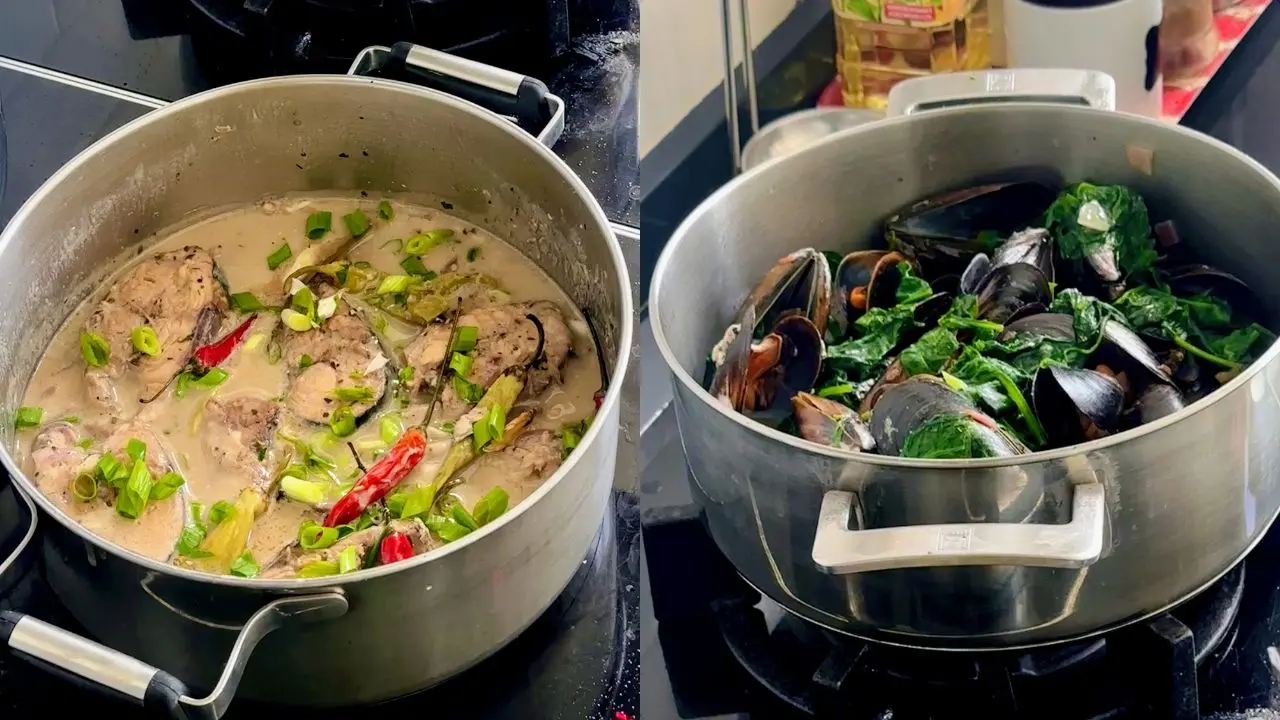
Today at lunch, two gifts from the sea met on our table—a rich, savory ginataang bonito and a light, warming tinolang tahong. Both were made from fresh ingredients, and both reminded us of a simple truth: good home cooking does not need to be complicated to be satisfying.
Consider how well these two dishes complement each other. One is thick and creamy, simmered in coconut milk. The other is clear and hot, gentle on the stomach. They are quite different in character, yet they agree perfectly over a plate of steaming rice.
The Bonito We Found
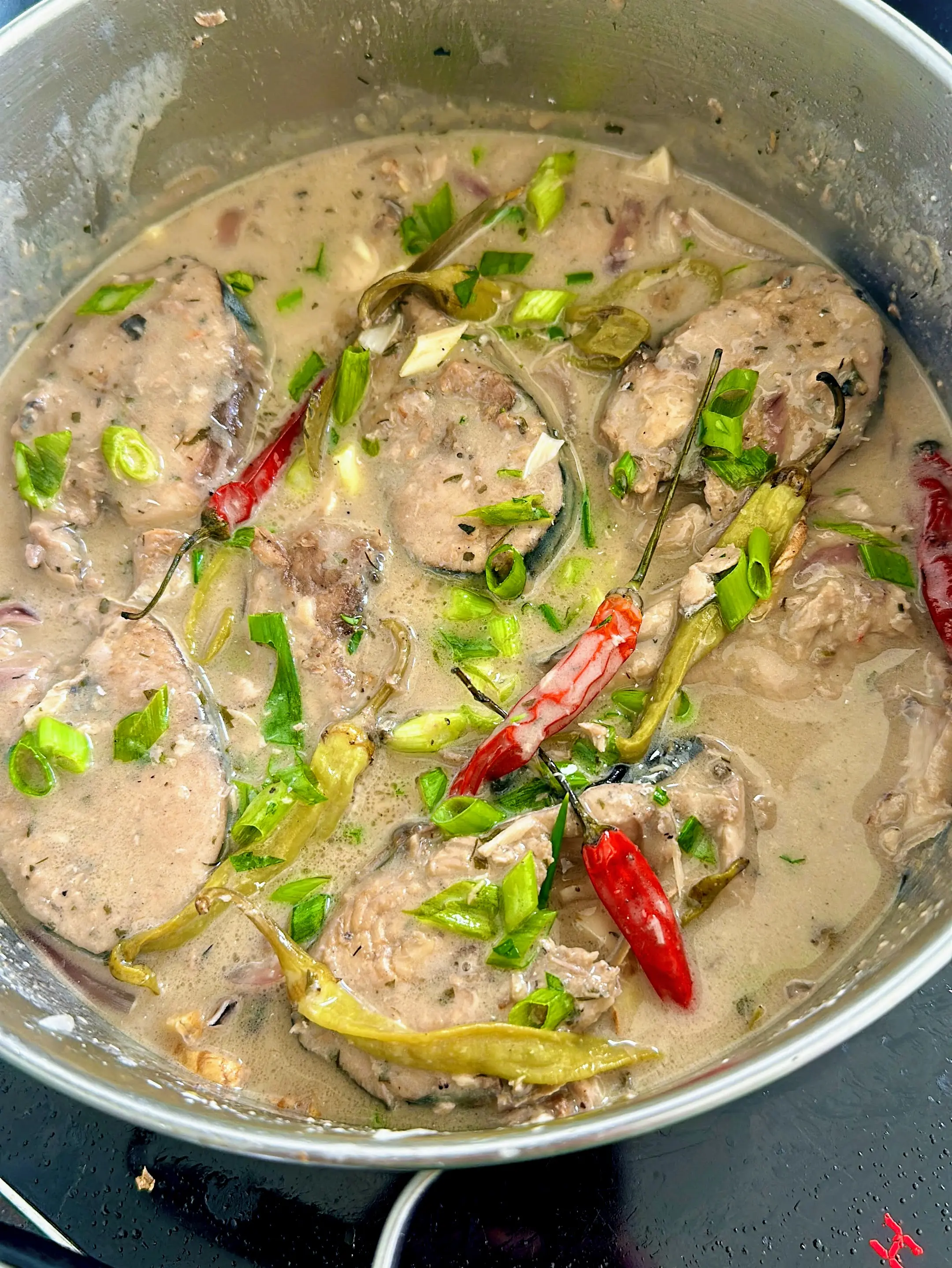
Here in Spain, one of the finest blessings of summer is the bonito—a tender, white-fleshed fish often compared to tuna. When we saw it at the market, we did not hesitate. We asked ourselves one question: coconut milk or sour broth? Today, the coconut milk won.
Bonito is naturally full of flavor, so only a little seasoning is needed. We let the coconut milk do the work, gently coming to a simmer until it drew in the fragrance of ginger, garlic, and chili.
Ginataang Bonito
A classic way of cooking fish in coconut milk—fragrant, rich, and made for plenty of rice.
Ingredients
- 1/2 kg bonito (or tuna), cut into steaks
- 2 cups coconut milk (thick, first-press if available)
- 1 cup thinner coconut milk (or water)
- 1 head garlic, crushed
- 1 onion, chopped
- 1 inch ginger, thinly sliced
- 3–5 long green chilies (or bird’s eye chili for more heat)
- 2 tablespoons fish sauce (patis)
- A little vinegar or calamansi
- Salt and pepper, to taste
- Oil for sautéing
How to Cook
- Sauté the garlic, onion, and ginger in a little oil until fragrant and soft.
- Pour in the thinner coconut milk (or water) and bring to a gentle boil. Season with fish sauce.
- Add the bonito steaks. Do not stir yet—let them settle and cook partway, about 5 to 7 minutes.
- Add the thick coconut milk and the chilies. Lower the heat and let it simmer gently until the sauce thickens, about 8 to 10 minutes. Avoid a hard boil so the coconut milk does not curdle.
- Season with salt, pepper, and a touch of vinegar or calamansi if you would like a hint of tang. Serve hot.
Tinolang Tahong
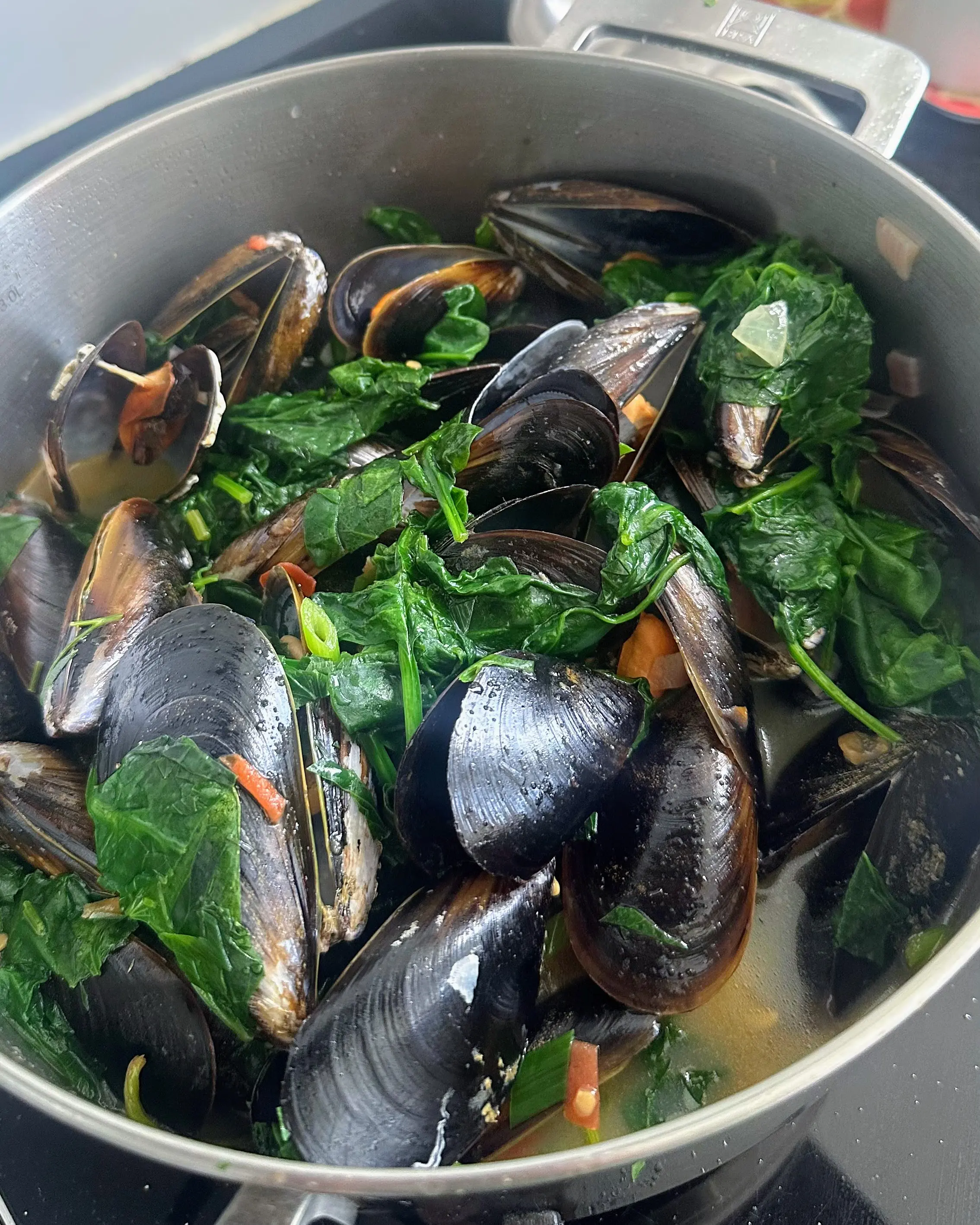
While the coconut milk simmered, we prepared the mussels (tahong). They were freshly caught, so they needed only a good rinse and the removal of the “beard” before cooking. There is little fuss to tinolang tahong—ginger, garlic, onion, and a handful of chili leaves, and you are on your way to a bowl of warmth and comfort.
The broth is at its best when kept simple, letting the natural sweetness of the mussels take center stage. One sip, and it is as if the sea itself has embraced you.
Light, hot, and remarkably easy to make—perfect for days when you want a gentle, nourishing soup.
Ingredients
- 1 kg fresh mussels, scrubbed and debearded
- 1 inch ginger, thinly sliced
- 1 head garlic, crushed
- 1 onion, sliced
- 2 tablespoons fish sauce (patis)
- 4 cups water (or rice-washing water)
- 1 bunch chili leaves or moringa (malunggay), or spinach
- 1–2 long green chilies
- Salt and pepper, to taste
- Oil for sautéing
How to Cook
- Sauté the ginger, garlic, and onion until fragrant.
- Pour in the water and bring to a boil. Season with fish sauce, salt, and pepper.
- Once boiling, add the mussels. Cover and cook just until the shells open, only about 3 to 5 minutes. Discard any mussels that do not open.
- Add the chili leaves (or moringa) and the green chilies. Cook one more minute, until the leaves wilt.
- Adjust the seasoning if needed, and serve immediately while hot.
Did You Know?
The bonito season in Spain. The bonito del norte (the albacore, or Thunnus alalunga) is one of the most admired fish in Spain, and it has a season all its own. From summer into early autumn—usually from June through October—fishermen take part in what is known as the costera del bonito, the traditional bonito run in the Cantabrian Sea and the Bay of Biscay. Remarkably, the fish are still caught one by one, using pole and line (línea y anzuelo), a careful and sustainable method that protects both the quality of each catch and the health of the sea. So if you find fresh bonito at the market this summer, you have come at just the right time—the season is at its peak.
The nourishment in mussels. Beyond their fine taste, mussels are a genuine treasure of nutrition. They are low in fat yet high in protein, and they rank among the best sources of vitamin B12, which the body needs for healthy blood and a healthy nervous system. They also provide omega-3 fatty acids that are good for the heart, along with iron, selenium, zinc, and manganese. Little wonder, then, that a bowl of tinolang tahong does more than warm the stomach—it strengthens the body as well.
It is worth pausing to appreciate all of this. From the fatty acids in a mussel to the fine flesh of a fish that arrives with the seasons, the sea provides for us in ways that are as generous as they are dependable—a provision that many find good reason to be thankful for.
Together at the Table
When both dishes were ready, we set them out—the ginataang bonito on one side, the tinolang tahong on the other, and hot rice in the middle. This is how simple a happy lunch can be: fresh from the sea, cooked with love, and shared together.
Do you have your own version of ginataang isda or tinolang tahong? We would love to hear about it. Tag us on Instagram at @ulampinoy so we can feature your cooking.
Let’s eat!